
The Staffing Challenge for Shipping Agency. And what it hides.
Why resilience is a process problem, not a hiring one.
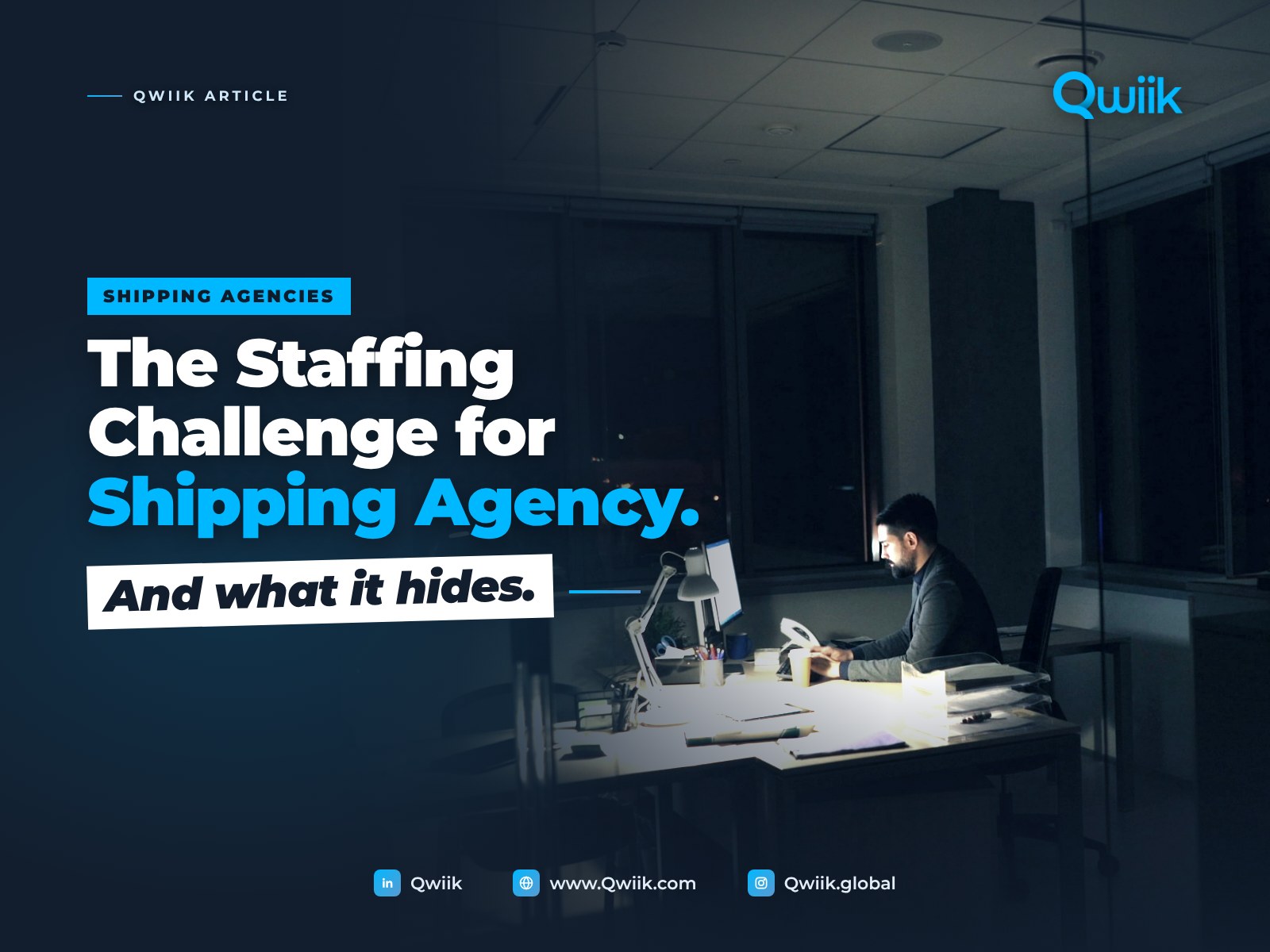
Ships keep getting bigger. Systems keep getting smarter. But in many shipping agencies, one thing can still holds everything back: work that only one person knows how to do.
When that person is sick, on leave or gone for good, payments wait, documents wait and customers wait. Most agencies see a staffing and retention problem. But it really is a process problem.
Why One Resignation Hurts More Than It Should
People leave more often than we expect. About 1 in 4 workers changes jobs every year (BLS). High turnover is a reality, especially within logistics and its demanding environment.
Every departure costs real money. Replacing one employee often impacts business continuity and can cost up to twice their yearly salary for senior roles (Gallup).
Knowledge walks out the door. About 42% of what a person knows about their job is only in their head (Panopto/YouGov). Which customer pays late, how a terminal handles specific releases, which report a principal wants… when they leave, it is gone.
New hires take a long time to catch up. A new employee needs about 12 months to work at full speed (Gallup). And meanwhile, other experienced staff have to stop serving customers to train them.
People leaving is normal. What makes it painful is that the work depends on what one person knows.
What a Resilient Agency Looks Like
The fix is not to stop people from leaving. It is to make sure the work does not depend on any one person. That takes the right systems and automation. Here is where to start:
Online payments with instant receipts. Customers pay in one place and get confirmation right away. No one has to check bank statements by hand.
Automatic payment matching. The system matches each payment to its invoice. Month-end does not stop when the finance person is away.
Document release once payment clears. Delivery orders and other documents go out in seconds, even at night or on weekends.
One place for every record. Invoices, receipts and documents live in one digital system, not in personal inboxes. Handovers become easy.
Clear steps for every task. Like a recipe, anyone can follow them. A new hire learns one system instead of ten personal habits.
This is more realistic than it sounds. Today's technology is able to automate activities that take up 60–70% of work time (McKinsey).
The Advantage for Agencies and Their Customers
Less risk: one departure becomes a small bump, not a crisis.
Faster onboarding: new staff follow the system from day one.
Service anytime: customers can get serviced anytime, even after office hours.
Work from anywhere: the team can work from the office, from home or from anywhere they need to.
Time for what matters: staff spend less time on routine checks and more on customers.
Much of the industry is still early on this shift. Even among shippers, nearly 3 in 4 still rely on spreadsheets (Freightos). Yet almost 9 in 10 freight forwarding staff agree that automation makes their work better (Dowling and Haddud, 2025). Agencies that move first will stand out.
Final Thought: Transform Your Bottleneck into Opportunities
People will always come and go. That is normal, and no agency can stop it.
What agencies can control is how their processes run. When the routine steps live in a system instead of in someone's memory, service stays fast and reliable, whoever is in the seat.
Start small: pick one routine process this quarter, automate it, and measure the hours it gives back to your team.
These are the challenges we built Qwiik to solve: benefiting the importers and exporters as much as the Agency itself !